Free written quotes across Ottawa and surrounding communities
New boards on sound framing Wood, composite and PVC surfaces Free written quotes

Deck Resurfacing and Board Replacement in Ottawa

Deck Builders Experts re-decks sound frames across Ottawa, which is the cheapest good outcome available on an older deck when the structure underneath has life left in it.

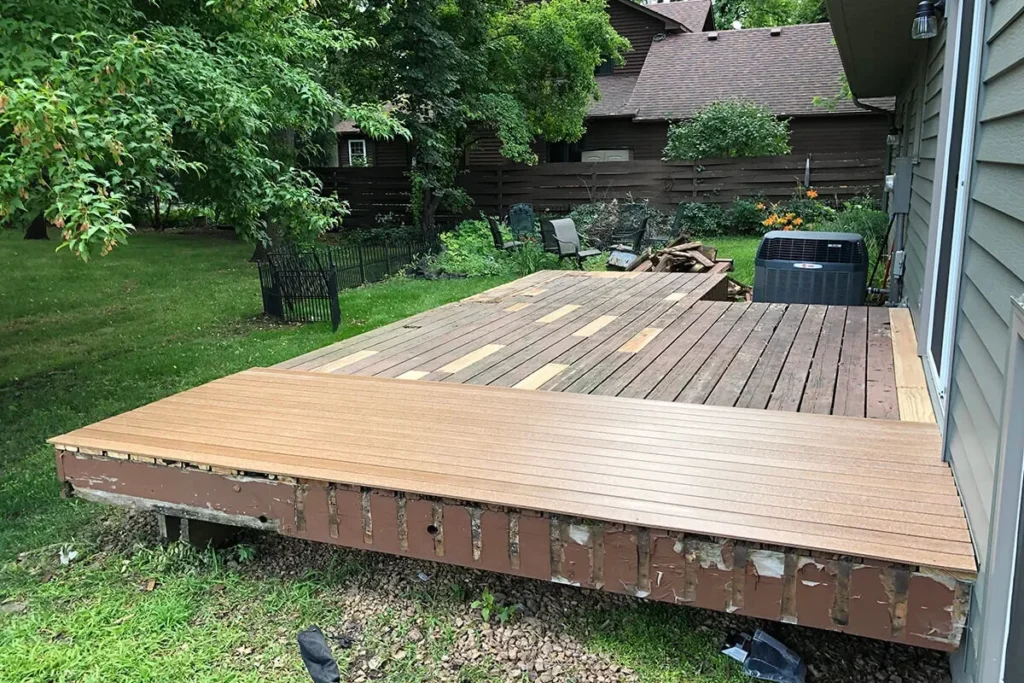
Resurfacing keeps the expensive part of your deck and replaces the part you walk on. The whole question is whether the frame beneath is genuinely sound. That is something we test, not something we assume.
Frame probed and tested before we quote
Joist spacing checked against the new board
Guards and stairs brought up with the surface

Get a Resurfacing Quote

Tell us the deck size and roughly when it was built.

What can we help with?

So the right crew reviews your project.

No obligation. We reply within one business day.

The phrase everyone uses loosely

Sound Framing Is a Test, Not an Assumption

Every quote for resurfacing rests on the phrase sound framing, and most of them never define it. Here is what it means when we say it. Joists, beams and the rim take an awl without the tool sinking in. The ledger is flashed and bolted to the house, not nailed, with no soft material behind it. Posts sit on saddles above their concrete rather than buried in it. Footings went to depth, and the deck has not shifted or dropped at any corner across its winters. Hangers, bolts and connectors are not so corroded that they are down to a fraction of their original section. And the joist spacing suits the board you want on top, which matters enormously if you are moving from wood to composite. A frame that passes all of that is worth re-decking. A frame that fails the footing or ledger test is not, no matter how good the new boards would look.

Book a frame check

The Under-Deck Check Before We Quote

We do this before putting a number on a resurface, because the answer sometimes changes the job entirely.

Probe the structural members

An awl into joists, beams and the rim, concentrating on the shaded, slow-drying areas and anywhere boards have been holding debris.

Expose and read the ledger

Flashed or not, bolted or nailed, and whether the rim joist of the house behind it is still solid. This single check decides more resurfacing jobs than any other.

Check the post bases

Posts on galvanized saddles above concrete are what we want to see. Posts embedded in concrete are holding water and will need replacing sooner than the new boards will.

Look for movement over winters

A deck that has dropped at a corner or racked out of square is telling you the footings did not reach depth, and new boards will not change that.

Measure the joist spacing

The spacing that worked under pressure-treated is often too wide for composite, which is less stiff. Sistering in extra joists to close the gap is usually cheaper than a full rebuild.

Inspect the hardware

Hangers and bolts corrode quietly, especially on a deck that has been wet and shaded for years. Failed connectors get replaced while the surface is off and everything is accessible.

What a Resurface Can and Cannot Change

Worth knowing before you plan around it, because the frame sets the limits.

What it changes

The surface, the fascia, the stair treads and usually the guard. You can go from tired pressure-treated to cedar, composite or PVC, change the board direction, and add a picture-frame border while the surface is off.

What it cannot change

The footprint, the height above grade and the position of the stairs, because all three are set by the frame and the footings. Moving any of those turns a resurface into a rebuild.

What it lets you fix

With the boards off, the frame is fully accessible for the first time since it was built. Corroded hangers, a suspect ledger and missing blocking all get dealt with while it is open.

Resurface Against Full Rebuild

Published 2026 market ranges. The gap between these two numbers is why the frame check is worth doing properly.

Resurface plus a new guard

Add $25 – $250 per linear foot

  • Most decks worth resurfacing have a railing worth replacing
  • Wood at the low end, glass or cable at the high end
  • Guard posts get reconnected to the frame at the same time
Get a quote

Full tear-down and rebuild

$15,000 – $50,000

  • Where the footings, ledger or frame will not support a re-deck
  • Range covers size and material across the market
  • Permit required once the surface is more than 600 mm above grade
Get a quote
Our Process

How a Re-Deck Runs

1

Frame check and board selection

We test the structure, measure joist spacing, and put samples in front of you. If the frame will not carry a re-deck, you hear that before anyone pays for boards.

2

Surface off, frame opened up

Old decking and fascia removed and hauled away. This is the only time the frame is fully visible, so it gets a second look with everything exposed.

3

Frame work before new boards

Sistered joists where spacing needs closing, replaced hangers, blocking added, ledger flashing corrected. Everything that should have been done when it was built.

4

New surface, guard and stairs

Decking with gaps and fasteners suited to the material, matching fascia and stair nosing, guard and handrails to height, then a walk of the finished deck together.

Resurfacing Clients

Feedback shared directly with us by clients.

5/5

Excellent experience from the initial estimate to the final inspection. The builders paid close attention to every detail and kept us updated throughout the project. I would recommend them to other Ottawa homeowners.

Karen L.

Ottawa

Direct Client

5/5

We hired Deck Builders Experts to replace our old wooden deck. They explained our material options clearly and helped us choose a design that suited our home and budget. We are very happy with the result.

Michelle T.

Ottawa

Direct Client

5/5

The team repaired and reinforced our existing deck, replaced the damaged boards, and improved the stairs. They worked efficiently and cleaned the entire area before leaving.

David C.

Ottawa

Direct Client

Resurfacing Questions

How do you actually test whether my frame is still good?

Mostly with an awl and a flashlight. We push the tool into joists, beams and the rim in the places that dry slowest, and if it catches, the wood is sound; if it sinks in, that member is finished. Alongside that we read the ledger and its flashing, check whether the posts sit on saddles above their concrete, and look for any corner that has dropped over past winters. That combination tells us what a resurface would be sitting on.

Do new boards have to follow the old joist spacing?

The boards have to suit the spacing that is there, which is why this gets checked first. Pressure-treated and cedar are usually fine on standard spacing. Composite is less stiff than wood of the same thickness and generally wants tighter spacing, tighter again on a diagonal layout. Where the gap is too wide, sistering in additional joists closes it, and that is normally far cheaper than rebuilding the whole frame.

How much of the deck comes apart during a resurface?

The decking, the fascia and the stair treads come off, and usually the guard too, since the posts are worth reconnecting while the frame is open. The joists, beams, posts and footings stay. From the yard it looks like a demolition for a day or two, then it goes back together quickly because the structural work is already there.

Is it worth resurfacing a deck that is twenty years old?

Age alone does not decide it. A twenty year old frame with footings at depth, a properly flashed ledger and posts on saddles can be an excellent candidate, while a ten year old deck with shallow footings is not. Resurfacing over sound framing runs roughly $5,000 to $15,000 against roughly $15,000 to $50,000 for a full rebuild, so the frame check is worth doing carefully before choosing either.

Can I change the deck shape while the boards are off?

Only within what the frame allows. You can change board direction, add a border, change the fascia and swap the material. Extending the footprint, raising the height or moving the stairs all need new footings and new framing, which makes it a rebuild rather than a resurface. If a shape change is what you actually want, it is better to price it as a rebuild from the start.

Will the new surface fix a deck that bounces?

Not by itself, but the work around it can. Bounce comes from joist span, spacing or missing blocking, and all three are accessible once the decking is off. Adding blocking or sistering joists while the frame is open is the right moment to deal with it, and it costs far less then than it would as a separate job later.

Boards Worn Out, Frame Still Good?

Free written quotes on deck resurfacing and board replacement across Ottawa and the surrounding communities.

Back to top