Free written quotes across Ottawa and surrounding communities
Western red cedar Pressure-treated framing Free written quotes

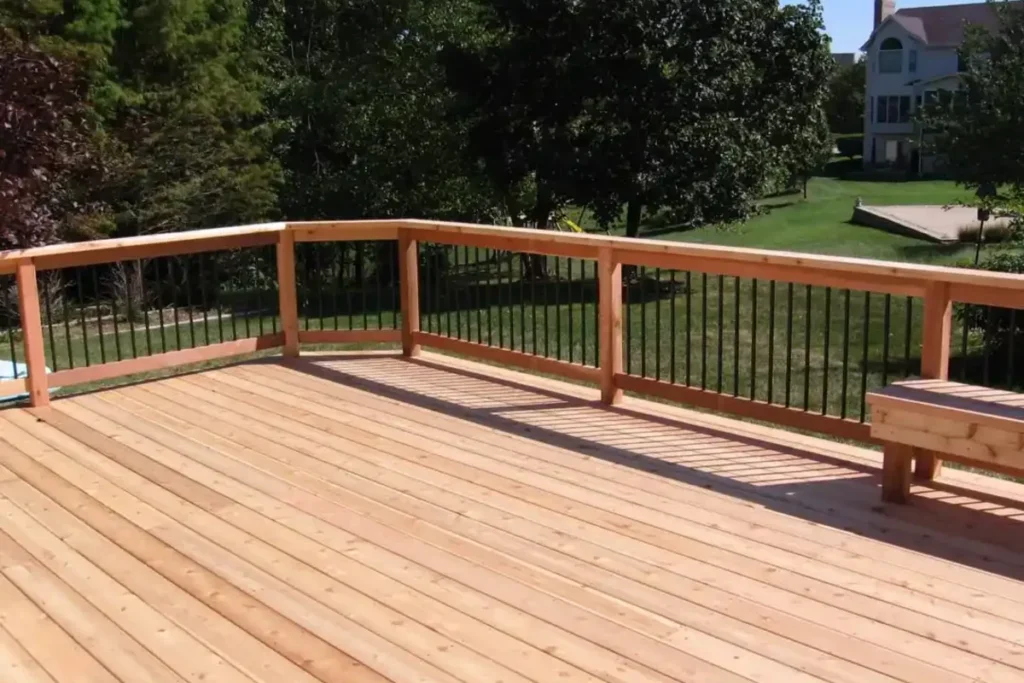
Cedar and Wood Deck Building in Ottawa

Deck Builders Experts builds western red cedar and pressure-treated decks across Ottawa, fastened and gapped for wood that keeps moving long after the crew leaves.

Wood is not a finished product. It swells through a humid Ottawa summer and shrinks through a dry heated winter, every year it is out there. The details that absorb that movement get decided the day the boards go down, not later.
Stainless or coated fasteners in cedar
Board gaps set to the lumber's moisture
Cut ends sealed before the board goes down

Get a Cedar Deck Quote

Tell us the size you have in mind and which wood you are leaning toward.

What can we help with?

So the right crew reviews your project.

No obligation. We reply within one business day.

Wood in an Ottawa climate

Why Cedar Moves and What We Do About It

Cedar and pressure-treated lumber arrive in completely different conditions and they have to be handled differently on site. Pressure-treated boards come off the truck wet from the treatment process, so they go down close and open up as they dry. Kiln-dried western red cedar arrives near its final size, so it gets a spacer gap at install or it will never drain. Get that backwards and you end up with either a deck you cannot sweep or boards jammed hard against each other by August. The second cedar-specific issue is tannin. Cedar carries natural extractives that react with ordinary steel, and the result is a black halo around every screw head within a season. Stainless or polymer-coated fasteners rated for cedar stop that before it starts.

Get a free quote

Wood Details That Decide How Long a Deck Lasts

None of these are visible from the patio door. All of them change how the deck ages.

Fasteners chosen for the species

Stainless or coated screws in cedar, because plain steel reacts with cedar tannins and streaks the board black around every head.

Board gaps set to the lumber

Wet pressure-treated goes down tight and opens as it dries. Kiln-dried cedar gets its gap at install, because it is not going to shrink much further.

Cut ends sealed

End grain drinks water faster than any face of the board. Every cut end gets coated before it goes down, including the ones nobody will ever see.

Posts on galvanized saddles

Posts sit on saddles above the concrete, never embedded in it. Concrete around a post traps water and rots the post right at grade.

Airflow under the frame

A wood deck dries from underneath. Skirting that breathes and clearance over the ground keep the joists from staying damp after every rain.

Cedar Against Pressure-Treated

Two good materials with different jobs. Here is how they actually compare in this market.

Western red cedar

Dimensionally stable, takes a semi-transparent stain evenly, and stays cooler underfoot in July than a dark composite board. It can be sanded back when it gets tired. Roughly $40 to $90 per square foot installed, on published Ottawa figures that vary widely between builders.

Pressure-treated

The least expensive route to a solid deck, around $25 to $60 per square foot on published Ottawa figures. It arrives wet, needs to dry before it takes a finish, and is more prone to checking and cupping.

The refinishing cycle

Both woods need washing and re-coating on a schedule. The stain product sets the interval, and a south or west-facing deck reaches it sooner than a shaded one. This is the real long-term cost of choosing wood.

Wood Deck Cost by Size

Published 2026 market ranges covering material and labour. Your written quote sets the actual price.

12 x 16 (192 sq ft)

$4,800 – $17,300

  • Pressure-treated roughly $4,800 to $11,500
  • Western red cedar roughly $7,700 to $17,300
  • One stair run to grade included in typical builds
Get a quote

20 x 20 (400 sq ft)

$10,000 – $36,000

  • Pressure-treated roughly $10,000 to $24,000
  • Western red cedar roughly $16,000 to $36,000
  • Additional stair runs add roughly $500 to $1,500 each
Get a quote
Our Process

How a Wood Deck Goes Together

1

Site visit and lumber talk

We measure, check the height above grade against the 600 mm permit threshold, look at the lot line, and put cedar and pressure-treated samples side by side in your own light.

2

Footings to depth

Sonotubes typically 10 to 12 inches, base flared to suit the load, taken to the depth Ottawa and eastern Ontario practice calls for, commonly 1.5 m. Footing count comes from the beam and joist spans, not a formula.

3

Ledger, beams and joists

Ledger flashed so water cannot sit behind it, joists in hangers, posts on galvanized saddles. This is the part that decides whether the deck feels solid in ten years.

4

Boards, guards and stairs

Decking with the right gap and the right fastener, guards at the height your elevation calls for, stringers cut and landed, then a walk of the finished deck together.

Wood Deck Clients

Feedback shared directly with us by clients.

5/5

Deck Builders Experts did an amazing job building our new backyard deck in Ottawa. The crew was professional, organized, and completed everything on schedule. The finished deck looks beautiful and feels very sturdy.

James R.

Ottawa

Direct Client

5/5

Excellent experience from the initial estimate to the final inspection. The builders paid close attention to every detail and kept us updated throughout the project. I would recommend them to other Ottawa homeowners.

Karen L.

Ottawa

Direct Client

5/5

We hired Deck Builders Experts to replace our old wooden deck. They explained our material options clearly and helped us choose a design that suited our home and budget. We are very happy with the result.

Michelle T.

Ottawa

Direct Client

Cedar and Wood Deck Questions

Why are there black marks around the screws on my cedar deck?

That is tannin staining, and it means plain steel fasteners went into cedar. Cedar's natural extractives react with the metal and bleed a dark halo out into the wood around each head. It is not structural, but it is permanent enough that sanding rarely clears it fully. Stainless or polymer-coated screws rated for cedar avoid it, which is why we use them on cedar work as standard.

Why did my new pressure-treated boards arrive soaking wet?

Pressure-treated lumber holds moisture from the treatment process, so it is genuinely heavier and wetter than cedar when it lands on site. It will shrink as it dries out over the first season. That is why we set the gap between wet treated boards tighter than we would with cedar. If a crew gaps wet treated lumber like it is dry, you get gaps wide enough to lose a phone down by the following summer.

Is a cedar deck cooler to walk on barefoot?

Cedar runs noticeably cooler in direct sun than a dark composite board, and it is one of the practical reasons homeowners with a south-facing yard or small kids still choose wood. It is not cool, and nothing is on a 30 degree afternoon, but the difference is real enough to feel through your feet.

Should I let a new wood deck weather before I stain it?

It depends which wood. Kiln-dried cedar can usually take a finish fairly soon after install. Pressure-treated needs to give up its treatment moisture first, or the stain will not penetrate and will lift within a year. The stain manufacturer sets the waiting period for their product, and we tell you what it is for the material on your deck rather than guessing.

Can a cedar deck be sanded back instead of replaced?

Yes, and that is one of cedar's real advantages. A grey, furry cedar surface with sound boards underneath can be washed, sanded and re-coated back to something close to new. The test is whether the boards are still solid. If an awl pushes into a board rather than catching, sanding is not going to save it and the board gets swapped.

Thinking About a Cedar Deck?

Free written quotes on cedar and pressure-treated builds across Ottawa and the surrounding communities.

Back to top